
Amazon E-commerce for Beginners: Win Your First 100 Sales
Amazon e-commerce for beginners made simple. Learn how to sell on Amazon in 2026, choose winning products, avoid mistakes, and grow fast
Starting an Amazon business in 2026 feels exciting. But it also feels overwhelming.
Thousands of new sellers join Amazon every single day. Most of them never make consistent sales. Some quit before selling their first product.
Not because Amazon is dead.
But they enter the marketplace without a real strategy.
As a beginner, if you want to win with an Amazon e-commerce business, you need more than random YouTube hacks. You need a roadmap that actually works in today’s Amazon ecosystem.
And trust me, Amazon in 2026 is very different from Amazon in 2016.
Competition is tougher. Fees are higher. Ads matter more. Customers expect premium experiences. Yet the opportunity is still massive.
Amazon now has more than 2 million active sellers worldwide, and over 82% use FBA to scale their business.
The best part?
New sellers still succeed every year because buyers continue spending billions on Amazon.
This guide will show you exactly how to start selling on Amazon the smart way.
No fluff. No fake promises. Just real-world strategies from years of marketplace experience.
Why Amazon Is Still the Best Place for Beginners
Many people ask the same question today.
“Is Amazon still worth it in 2026?”
Short answer: yes.
But only if you approach it like a real business.
Amazon continues to dominate global e-commerce. The platform generates hundreds of billions in annual sales and continues to grow.
Here’s why beginners still choose Amazon:
- Massive built-in customer traffic
- High buyer trust
- Fast shipping through FBA
- Easy scaling opportunities
- Global selling options
- Strong conversion rates
Unlike starting your own website from scratch, Amazon already has buyers ready to purchase.
You are not trying to convince people to trust a random store.
You are leveraging Amazon’s authority.
That changes everything.
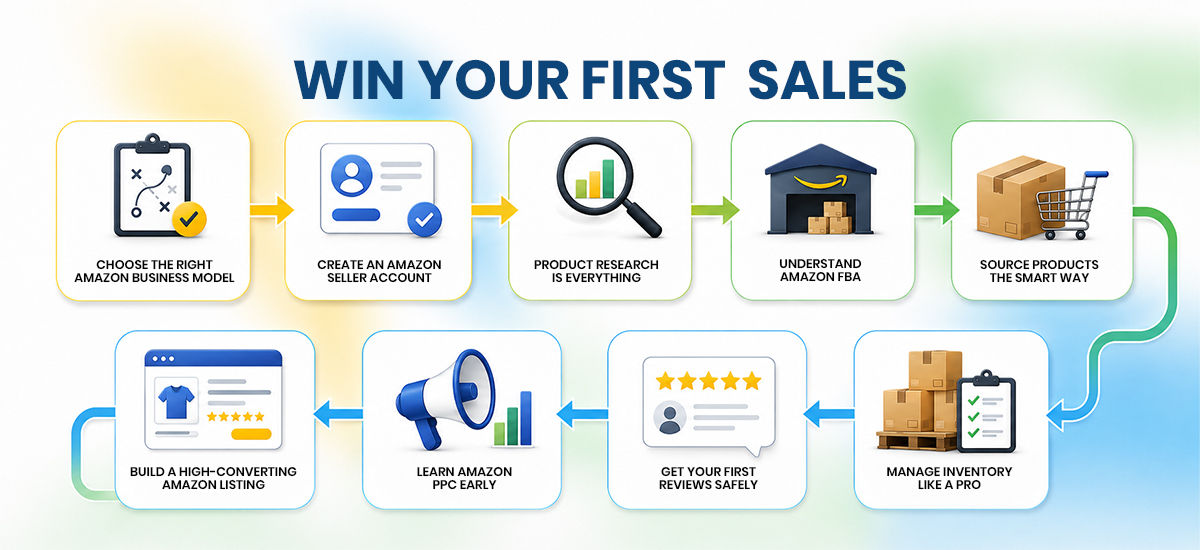
Step 1: Choose the Right Amazon Business Model
This is where most beginners mess up.
They jump into random products without understanding how Amazon businesses actually work.
Here are the main Amazon selling models in 2026:
Private Label
You create your own branded product.
This is still the best long-term model for serious sellers.
Why?
Because branding gives you control. You build an asset instead of flipping random products.
Example:
You sell a garlic press under your own brand instead of reselling someone else’s product.Pros
- Higher profit margins
- Brand ownership
- Better scaling potential
Cons
- Higher startup cost
- Requires product research
Wholesale
You buy branded products in bulk and resell them.
Good for beginners who want lower risk.
But margins are usually smaller.
Retail Arbitrage
You buy discounted products locally and resell them on Amazon.
This model still works, but scaling is difficult.
It’s better as a learning experience than a long-term business.
Dropshipping
Amazon allows dropshipping only under strict rules.
Most beginners struggle here because shipping delays and policy violations can destroy accounts quickly.
For most people, private label + FBA remains the strongest option.
Step 2: Create an Amazon Seller Account
Setting up your account is simple.
Go to Amazon Seller Central and choose between:
Individual Plan
- No monthly fee
- Pay per sale
Professional Plan
- Around $39.99/month
- Better tools and analytics
Most serious sellers choose the Professional plan immediately.
You’ll need:
- Government ID
- Bank account
- Credit card
- Tax information
- Phone number
Amazon verification is stricter now than before.
Make sure all details match perfectly.
Step 3: Product Research Is Everything
Bad products kill businesses.
Not Amazon.
The biggest beginner mistake is choosing emotional products instead of data-driven products.
Winning products usually have:
- High demand
- Low competition
- Healthy margins
- Simple design
- Low return rates
What Makes a Good Beginner Product?
Look for products that:
- Sell for $20–$70
- Have fewer than 300 reviews on the top competitors
- Solve a small problem
- Are lightweight
- Avoid complicated electronics
Avoid These Beginner Product Traps
Never start with:
- Fragile products
- Seasonal products
- Patent-heavy products
- Electronics
- Supplements
These categories create headaches fast.
Use Data, Not Guesswork
Use tools like:
- Helium 10
- Jungle Scout
- Keepa
These tools help you analyse:
- Monthly sales
- Competition
- Search volume
- Profit margins
Smart product research saves months of pain later.
Step 4: Understand Amazon FBA
FBA means Fulfilment by Amazon.
You send inventory to Amazon warehouses. Amazon stores, packs, and ships products for you.
This is why 82% of sellers now use FBA.
FBA gives you:
- Prime badge
- Faster shipping
- Better conversion rates
- Customer service support
But fees matter more than ever in 2026.
Amazon referral fees usually range between 5%–15% depending on the category.
FBA fees also increased recently.
That means margin calculation is critical now.
Step 5: Source Products the Smart Way
Most Amazon sellers source from China, Vietnam, or India.
Alibaba remains the most common sourcing platform.
But beginners should focus on supplier quality, not just cheap pricing.
Cheap inventory creates:
- Bad reviews
- High returns
- Account problems
Always order samples first.
Never trust supplier photos alone.
Step 6: Build a High-Converting Amazon Listing
Your listing is your sales page.
A weak listing destroys conversions even if your product is great.
Amazon Listing Optimisation Checklist
Product Title Include:
- Main keyword
- Benefits
- Product size/features
Bullet Points Focus on:
- Pain points
- Benefits
- Emotional triggers
Product Images
This matters more than most beginners realise.
Your images should include:
- White background images
- Lifestyle images
- Infographics
- Size comparison images
Amazon SEO Matters More Than Ever
Amazon is a search engine.
Your listing must be optimized for Amazon SEO.
Use relevant keywords naturally in:
- Title
- Bullets
- Backend search terms
- Description
Avoid keyword stuffing. Write for humans first.
Step 7: Learn Amazon PPC Early
In 2026, organic traffic alone is not enough.
Amazon ads drive visibility.
New sellers who ignore PPC usually struggle badly.
Start with:
- Automatic campaigns
- Low daily budgets
- Exact match keywords later
Monitor:
- ACOS
- Click-through rate
- Conversion rate
Advertising is now part of the Amazon game.
Not optional anymore.
Step 8: Get Your First Reviews Safely
Reviews build trust.
But Amazon’s review policies are extremely strict now.
Never:
- Buy fake reviews
- Offer incentives
- Use shady review groups
Instead:
- Use product inserts carefully
- Deliver great customer experiences
- Use Amazon’s “Request a Review” feature
A few authentic reviews can change everything.
Step 9: Manage Inventory Like a Pro
Inventory mistakes destroy cash flow.
Too much stock creates storage fees.
Too little stock kills rankings.
Many sellers underestimate Amazon storage costs until profits disappear.
Monitor:
- Sell-through rate
- Inventory age
- Forecast demand
Cash flow management becomes the real game as you grow.
Biggest Amazon Beginner Mistakes
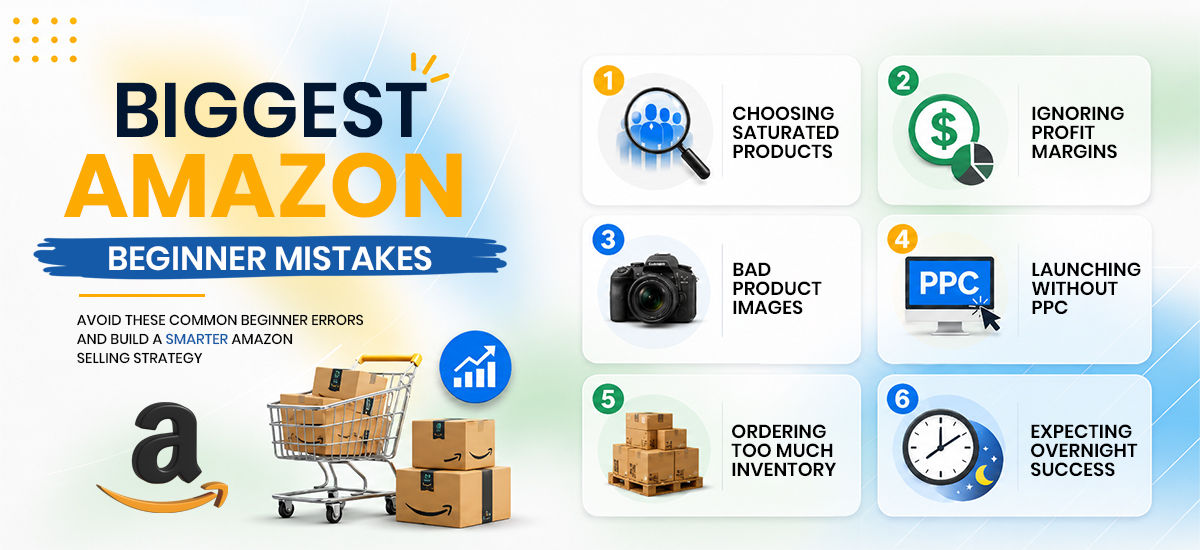
1. Choosing Saturated Products
Competition alone can crush beginners.
2. Ignoring Profit Margins
Revenue means nothing without profit.
3. Bad Product Images
Visuals directly affect conversion rates.
4. Launching Without PPC
Visibility requires advertising now.
5. Ordering Too Much Inventory
Start smaller. Test first.
6. Expecting Overnight Success
Amazon is a business, not a lottery ticket.
How Much Money Do You Need to Start?
Realistically?
Most beginners start with $500–$5,000. Industry data shows that over half of sellers begin within this range.
A basic private label launch may include:
| Expense | Estimated Cost |
|---|---|
| Seller Account | $40/month |
| Inventory | $500–$2,000 |
| Product Samples | $100 |
| Shipping | $300–$800 |
| Branding | $150–$300 |
| PPC Ads | $200–$500 |
Start lean. You can scale later.
Can Beginners Still Succeed on Amazon in 2026?
Absolutely.
But the easy-money era is gone.
Today’s successful sellers focus on:
- Branding
- Data
- Customer experience
- Smart advertising
- Long-term strategy
The sellers winning now treat Amazon like a real e-commerce company.
Not a side hustle shortcut.
Interestingly, around 64% of Amazon sellers become profitable within their first year.
That proves opportunities still exist.
Final Thoughts: Amazon Rewards Serious Sellers
Here’s the truth most gurus avoid saying.
Amazon is harder now.
But it is also bigger than ever.
That means smart sellers still have enormous opportunities.
If you approach Amazon e-commerce for beginners with patience, strategy, and realistic expectations, your chances improve dramatically.
Will you become rich overnight?
Probably not.
Can you build a real online business that creates freedom and long-term income?
Absolutely.
The key is simple:
Stop chasing shortcuts.
Start building systems.
That is how real Amazon businesses survive in 2026 and beyond. Are you interested in starting to sell your products on Amazon?
Let’s discuss your product, niche, and launch plan. Skillerszon LLC can help you set up and optimize your Amazon store professionally.