E-commerce Store Management: 8 Proven Steps to Build, Optimize & Scale Your Online Store | SKZGROUP
published May 14, 2026Author: Fatima Fairuj Ruhi
E-commerce Store Management: 8 Proven Steps to Build, Optimize & Scale Your Online Store
Master e-commerce store management with 8 practical steps to improve your online store, streamline operations, boost sales, and scale confidently in 2026.
Running an e-commerce store today is no longer just about listing products online—it’s about managing an entire digital ecosystem. Whether you operate an Amazon e-commerce business or a Shopify e-commerce website, success depends on how well you handle operations, customer experience, inventory, and data.
With rising competition and smarter consumers, effective e-commerce store management has become the backbone of sustainable growth. This guide breaks down everything from strategy and setup to optimization and scaling, so you can build a high-performing Shopify e-commerce store or dominate marketplaces like Amazon with confidence.
What is E-commerce Store Management?
"E-commerce store management" refers to the process of overseeing all aspects of an online business. This includes product listings, inventory, pricing, order fulfillment, customer service, marketing, and performance tracking.
It’s not just about keeping your store running—it’s about making sure every part works efficiently together. From backend systems to customer-facing experiences, effective management ensures your e-commerce store performs consistently and profitably.
Why is This Important?
1. Gaining a Competitive Edge
In saturated markets, well-managed stores achieve superior performance by focusing on faster delivery, enhanced user experience (UX), and effective pricing strategies.
2. Boosting Sales and Revenue
Optimizing product pages, streamlining the checkout process, and implementing targeted marketing strategies effectively boost conversions and increase average order value.
Impact & Future Plans
With this launch, SKZ Group aims at:
Reaching out to global regions with digital retail expertise
Bringing the latest products at customers’ forefront
Enhancing customer experience with automation
Fostering a digital e-commerce ecosystem with higher employment rates
SKZ Group believes that this new brand will prove to be a key player in future expansion.
SKZ Group serves with diverse knowledge within a broad eco-system, businesses, and individuals worldwide, both in technologies and international trade.
3. Saving Costs and Optimizing Resources
Automation and system integration streamline processes by reducing manual labor, minimizing errors, and enhancing overall efficiency.
4. Minimizing Risks
Effective inventory tracking and fraud detection systems are essential for minimizing losses and ensuring smooth operations.
5. Supporting Smart Decisions
Data analytics offer valuable insights into customer behavior, enabling businesses to make informed decisions.
6. Staying Adaptable
Trends in retail shift rapidly, making agile store management essential for adapting strategies efficiently and minimizing disruption.
7. Enabling Growth and Scalability
A structured system enables business growth by streamlining operations and minimizing disruption, fostering efficiency and clarity in processes.
Key Steps for Successful E-commerce Store Management in 2026
1. Define Your Strategy and Goals
A successful e-commerce store starts with clarity.
Customer Focus: Identify your target audience and their buying behavior
Brand Identification: Build a unique identity that stands out
Tech Stack: Choose tools that support automation and scalability
Revenue Targets: Set clear financial goals
Conversion Rates: Track how many visitors become buyers
Average Order Value (AOV): Encourage upselling and bundling
Customer Retention: Focus on repeat purchases
2. Build a Seamless, Mobile-First Website
Mobile Design Essentials
Over 70% of users shop via mobile. Your design must be responsive, clean, and easy to navigate.
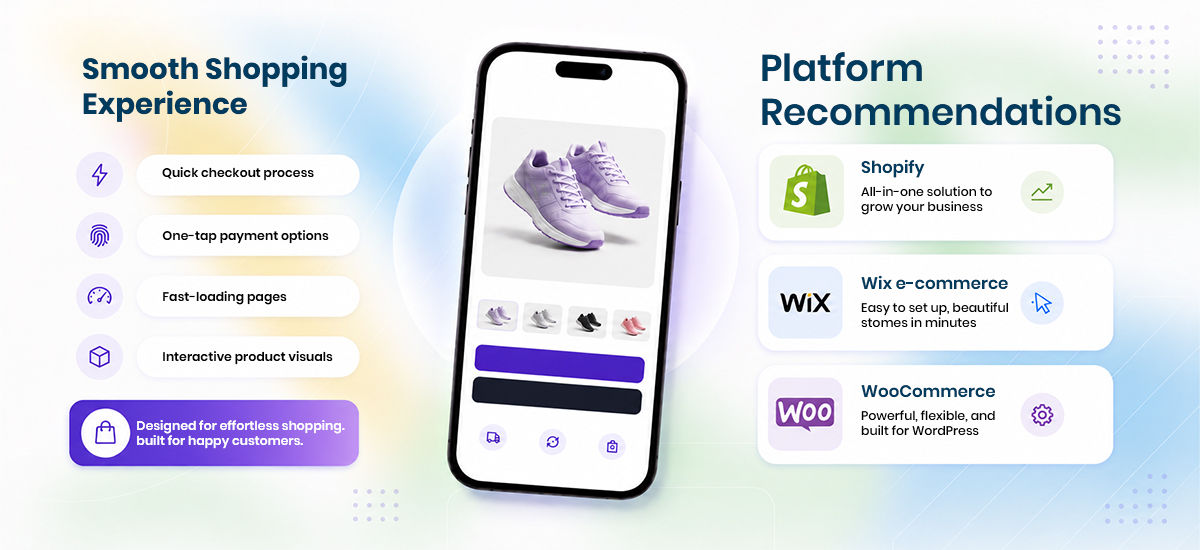
Smooth Shopping Experience:
Quick checkout process
One-tap payment options
Fast-loading pages
Interactive product visuals
Platform Recommendations:
Shopify for scalability
Wix e-commerce for beginners
WooCommerce for customization
Comparison chart of Shopify vs. WooCommerce vs. Wix
3. System Setup and Integration
Inventory and Product Management
Use centralized systems to track stock levels and avoid overselling.
Order and Fulfillment
Automate order processing to reduce delays and errors.
Accounting and Finances
Integrate accounting tools for real-time financial tracking.
Customer Data Management
Collect and organize customer data for personalized marketing.
Payment Processing
Ensure secure, multi-currency payment options.
Marketplace and Channel Connections
Sync your store with Amazon, social media, and other sales channels.
4.Optimizing Inventory Management
Prioritize Products
Focus on high-performing items to maximize revenue.
Just-in-Time (JIT)
Reduce storage costs by ordering stock only when needed.
First-In, First-Out (FIFO)
Sell older inventory first to prevent waste.
Safety Stock
Maintain backup inventory to avoid stockouts.
5.Implement Omnichannel Strategies
Unified Branding & Messaging
Maintain consistent branding across all platforms.
Map Customer Touchpoints
Understand where and how customers interact with your brand.
Data-Driven Insights
Use analytics to optimize marketing and sales strategies.
6.Efficient Order Fulfillment and Logistics
Self-Managed Fulfillment
Control operations internally for better customization.
Third-Party Logistics (3PL)
Outsource logistics to scale quickly.
Supplier-Direct Shipping
Reduce inventory costs by shipping directly from suppliers.
Marketplace Fulfillment Networks
Use Amazon FBA for faster delivery and trust-building.
Fulfillment Approaches to Choose From
Self-managed for control
3PL for scalability
Supplier-direct for low overhead
Marketplace networks for speed 7.Monitor Data and Mitigate Risks
Data Security and Fraud Prevention
Implement secure payment gateways and fraud detection tools.
Inventory and Supply Chain Risk Control
Track supply chain disruptions and maintain backup suppliers.
Website Performance and System Stability
Ensure uptime, fast loading, and a bug-free experience.
8. Enhance Customer Service & Experience
Deliver value at every stage:
Before buying: Clear product descriptions and reviews
During Checkout: Simple and secure process
After Delivery: Follow-ups, support, and easy returns
Great service builds trust and increases lifetime value.
Platform & Security Maintenance
1. Security & Compliance
Encrypted connections
Payment protection
Threat monitoring
Controlled access
2. Data Protection & Recovery
Regular backups and disaster recovery plans.
3. Performance & Speed Optimization
Optimize images, scripts, and hosting for faster load times.
eCommerce Store Management Trends in 2026
1. AI-Led Operational Automation
AI tools automate inventory, pricing, and customer service.
2. Agile, Modular Infrastructure
Flexible systems allow quick updates and integrations.
Secure data handling ensures compliance and trust.
6. Predictive Decision-Making
Use analytics to forecast demand and trends.
Conclusion
Mastering E-commerce Store Management is essential for building a profitable and scalable online business. Whether you run an Amazon e-commerce business or a Shopify e-commerce store, success lies in combining strategy, technology, and customer experience.
By following these step-by-step guidelines—defining goals, optimizing systems, managing inventory, and leveraging data—you can transform your e-commerce store into a high-performing digital asset ready for 2026 and beyond.